
Combining Ortho-K and Atropine: When Does a Child Need Dual-Action Myopia Control?

Childhood myopia does not progress at the same rate for every child. While Orthokeratology may provide effective myopia control on its own, some children continue to experience changes in their prescription or axial length. In these cases, combining Ortho-K and low-dose atropine may provide a more comprehensive approach to slowing myopia progression.
How Ortho-K Supports Myopia Control
Ortho-K uses custom-designed contact lenses that are worn overnight. These lenses gently reshape the cornea while a child sleeps, providing clearer daytime vision after the lenses are removed.
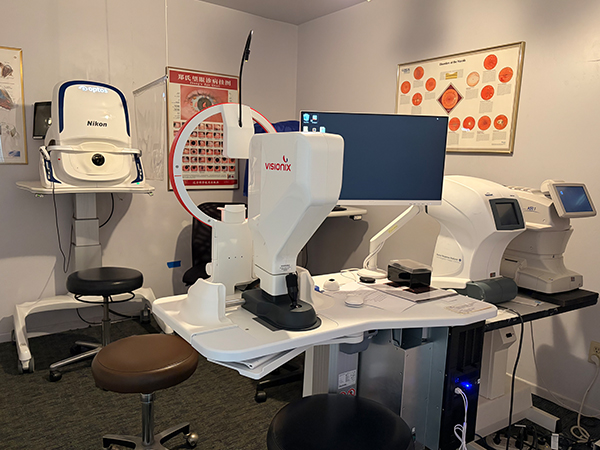
The specialized design also changes how light focuses across the retina. This helps reduce the signals associated with continued eye growth, which is important because excessive axial elongation is the primary structural change linked to worsening myopia. At Vision Solutions Optometry, axial length measurements allow Dr. Peters and our team to monitor changes in the eye over time rather than relying only on prescription updates.
What Low-Dose Atropine Adds
Low-dose atropine is administered as an eye drop, typically at night. It works through a different biological pathway than Ortho-K and may help regulate the eye growth associated with progressive myopia.
Atropine does not reshape the cornea or correct blurry distance vision. Instead, it is used specifically as a myopia management treatment. When paired with Ortho-K, the child receives both optical and pharmaceutical support.
When Might Combination Treatment Be Recommended?
Dual-action myopia control is not automatically necessary for every child. It may be considered when an eye doctor identifies factors such as:
• Continued axial length growth despite consistent Ortho-K wear
• A prescription that is changing more quickly than expected
• Myopia that began at a young age
• A strong family history of moderate or high myopia
• Significant progression between follow-up appointments
• A higher starting level of nearsightedness
• Multiple risk factors for future high myopia
The decision should consider the child’s age, eye health, prescription, treatment history, lifestyle, and ability to follow the recommended routine.
Monitoring Determines Whether Treatment Is Working
Regular follow-up visits are essential for children using Ortho-K, atropine, or both. During these appointments, the eye doctor may evaluate visual clarity, corneal health, lens fit, prescription changes, and axial length.
Axial length is especially valuable because a child’s prescription may appear relatively stable even when the eye is still growing. Tracking this measurement helps determine whether the current plan is providing adequate myopia control or whether another treatment should be added.
Creating a Personalized Myopia Management Plan
The goal of combining Ortho-K and atropine is not simply to use more treatment. It is to provide the appropriate level of control for a child whose myopia remains active. Some children respond well to Ortho-K alone, while others benefit from a carefully monitored combination approach.
Schedule your child’s eye exam with Vision Solutions Optometry to explore Ortho-K, atropine drops, and other personalized treatments for myopia control. Contact our office in La Mesa, CA, by calling (619) 461-4913 today.
Quick Links
Helpful Articles
All Eye Care Services
Find personalized eye care excellence with our comprehensive services. From eye exams to advanced diagnostics, trust us for all your vision needs.
Keep In Touch
For non-urgent questions or to learn more about our services, contact us today!
© 2026 Vision Solutions Optometry. All rights Reserved - Accessibility Statement - Privacy Policy - Sitemap
Managed and Designed by 