Specialty Contact Lenses
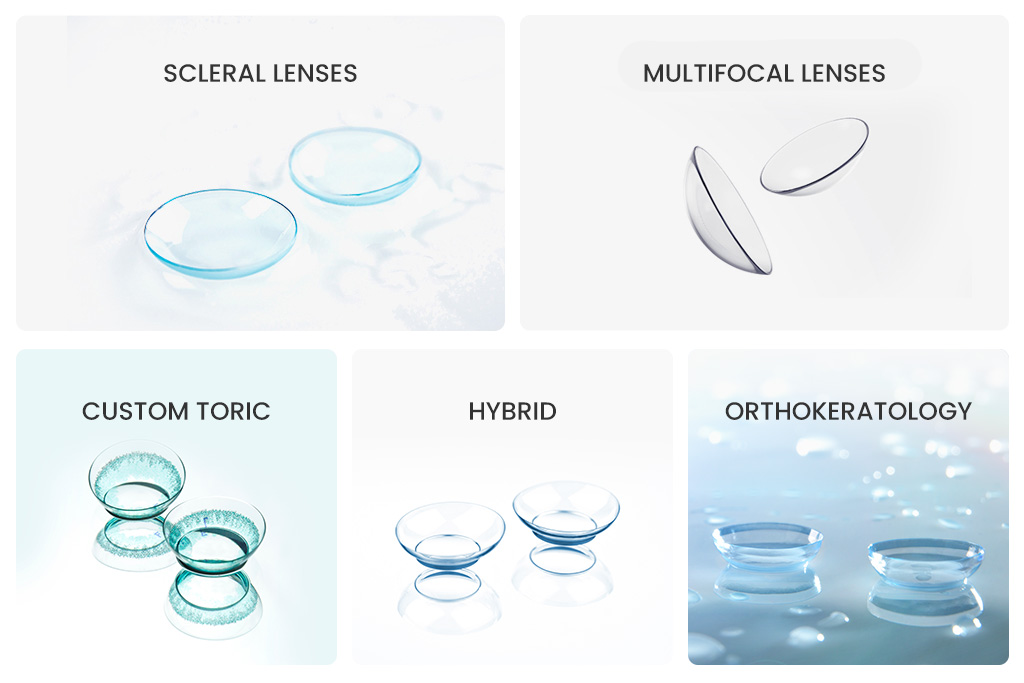
Every patient is different and so are their eyes. This means that there need to be different types of contact lenses to suit each individual. Some patients have corneal abnormalities which mean that conventional lenses won’t sit comfortably on the surface of their eyes, while others suffer from eye conditions that mean normal contact lenses won’t be comfortable or could irritate their eyes.
As you may have guessed from the name, specialty contact lenses are unconventional contacts that are designed for patients that regular contacts might not be suitable. Here are some of the main types of speciality contact lenses and who they are recommended for.
Who might be a good patient for specialty contact lenses?
Some of the patients that might benefit from specialty contact lenses include those who:
Have been diagnosed with dry eye syndrome
Have corneal scarring
Have been diagnosed with keratoconus, a condition characterized by the bulging of the cornea
Suffer from strabismus, a condition where the patient has an eye that turns in or out relative to the other
Have suffered an injury to the eye
Suffer from a peripheral corneal thinning disorder
Are intolerant to other types of lenses
Your eye doctor or contact lens provider will be able to tell you if you need specialty contact lenses and if so, which lenses would be best based on your individual requirements.

Scleral Contact Lenses
Scleral contact lenses are very different than standard contact lenses. They are made out of a rigid gas permeable material, but are much larger in diameter, with customizable diameters and curves depending on your specific needs. This larger size difference allows the contact lens to touch only the sclera of the eyes (the white part), rather than the cornea (the clear window). This lens vaults over the cornea without actually touching the corneal surface. The space under the contact lens is filled with a fluid that gently bathes the eye all day in hydration. It also helps to create a smoother surface on the front of the eye. This can be a great choice for scarring of the eye, dry eye, keratoconus, or other eye conditions that create corneal abnormalities. Many patients do not see well with conventional contact lenses or glasses due to the irregularities of the cornea but can see exceptionally well with scleral contact lenses. They are extremely comfortable to wear all day.
Multifocal Contact Lenses
Some time after the age of 40, most people experience difficulty seeing both distance and near with their glasses. This condition called presbyopia requires the need for either bifocal or progressive glasses, or the person removing the glasses to read. Multifocal contact lenses help to restore the ability to see distance and near vision clearly using several different designs. This includes aspheric lenses that have either the distance of the lens in the center and the reading power in the periphery, or the center of the lens for reading and the distance power in the periphery. This can be done with soft contact lenses, including lenses that also correct astigmatism, or rigid gas permeable lenses or hybrid lenses (an RGP in the center with a soft skirt). Other lens designs include a translating lens that the lens has distance vision in the top and then moves upward when looking down to read to see near vision out of the bottom.
Custom Toric Contact Lenses
People with astigmatism can wear toric lenses that help correct their vision. Astigmatism is an optical defect where light rays entering the eye are bent unequally in different meridians preventing a sharp point of focus on the retina. Soft, rigid gas permeable, scleral, and hybrid lenses can all help to bring together those points of light into focus. Higher amounts of astigmatism often fall out of the standard toric lenses on the market. We can custom-design lenses for the higher astigmatism patients to address those harder to fit prescriptions.
Hybrid Contact Lenses
Hybrid contact lenses combine a rigid gas permeable (RGP) center with a soft contact lens skirt. This design improves lens centration while providing the comfort and feel of a soft contact lens. These lenses can be made to correct all types of visual problems, including astigmatism, presbyopia, and irregular corneas.
Orthokeratology
Orthokeratology lenses are custom contact lenses that gently mold and reshape your eye overnight while you sleep to change your vision and eliminate myopia, hyperopia, and astigmatism. When wearing orthokeratology lenses nightly, you can eliminate the need for glasses wear during the day. They are also FDA-approved to slow down the progression of nearsightedness (myopia) in children. This is a safe non-sergival alternative to laser vision correction.
Specialty contact lenses may also be recommended for:
Myopia control
High astigmatism
High prescriptions
Presbyopia (age-related loss of near focusing ability, typically after age 40)
What to expect during an eye exam:
Children up to age 18 will have the length of their eyes (axial length) measured at each visit with the doctor to determine if their eyeball's growth is in the normal or abnormal range for their age. An axial length that is becoming longer at a rapid rate puts the child at risk for developing myopia. Longer eyes tend to develop eye diseases over time therefore myopia is now considered an eye disease.
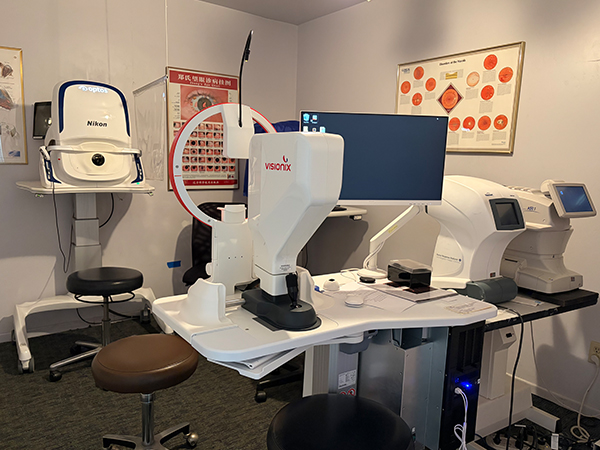
When you visit Vision Solutions Optometry for an eye exam, our optometrist will perform a series of tests to assess your vision and the health of your eyes. The exam includes visual acuity tests to determine your prescription for eyeglasses or contact lenses, as well as a refraction assessment. Our eye doctor will also examine the internal and external health of your eyes, checking for signs of common conditions such as cataracts, glaucoma, and retinal problems. In addition, your eye pressure will be measured to screen for glaucoma, and the overall function of your eyes will be carefully assessed to screen for focusing and eye teaming issues.
For more information about specialty contact lenses, don’t hesitate to speak to our dedicated eye care team.
Why choose Vision Solutions Optometry?
When looking for eye exams near you, choosing an office who understands your unique needs and provides personalized care is essential. At Vision Solutions Optometry in La Mesa, CA, our eye doctor is dedicated to offering comprehensive eye exams and helping you maintain optimal vision health. Whether you are due for a routine checkup or have concerns about your eye health including emergency eye visits, we are here to provide the care and expertise you need.
Call us now to make an appointment.
Quick Links
Helpful Articles
All Eye Care Services
Find personalized eye care excellence with our comprehensive services. From eye exams to advanced diagnostics, trust us for all your vision needs.
Keep In Touch
For non-urgent questions or to learn more about our services, contact us today!
© 2026 Vision Solutions Optometry. All rights Reserved - Accessibility Statement - Privacy Policy - Sitemap
Managed and Designed by 